Flat Feet: Causes and effective treatment
Did you know that flat feet can cause not only pain in the feet but also disrupt the functioning of the spine, joints, and even internal organs? In the modern world, where a sedentary lifestyle and uncomfortable shoes have become the norm, this problem is taking on catastrophic proportions.
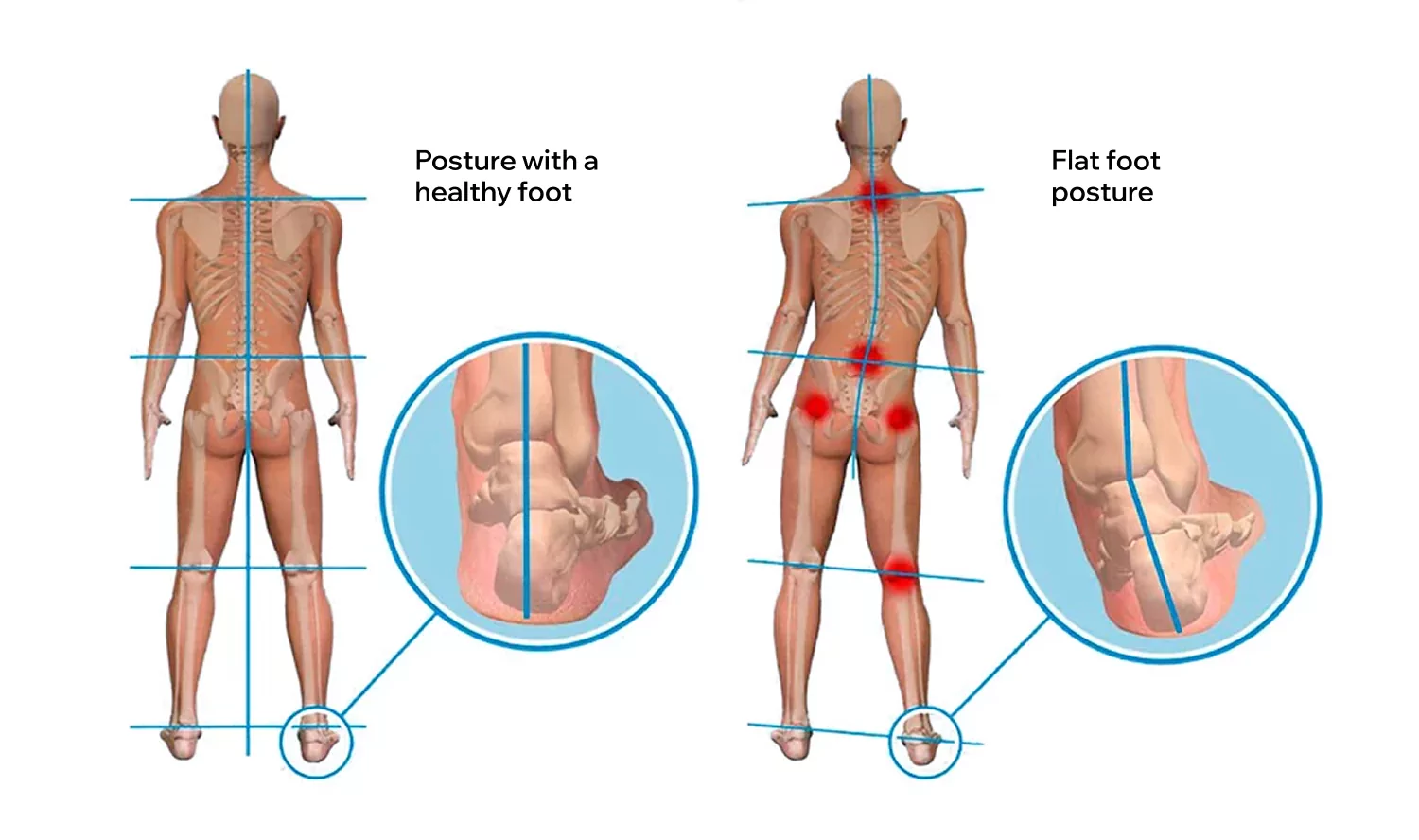
With flat feet, the arch of the foot drops, and the foot fails to perform its cushioning function. This deformation can lead to serious problems with posture and overall health.
Flat feet are one of the most common musculoskeletal problems, affecting 20 to 37% of people worldwide. However, this defect can be corrected — the key is to diagnose it early and choose the right treatment strategy.
What is flatfoot?
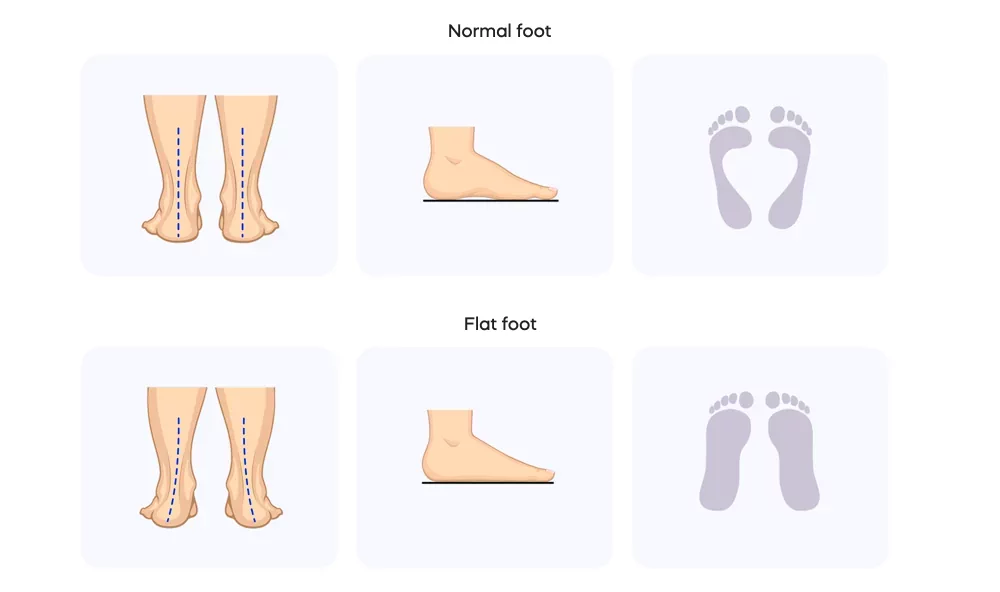
Flatfoot is the loss of the natural curvature of the foot, which leads to an incorrect distribution of the load on the legs and spine. It comes in the following types:
- Transverse flatfoot (flattening of the forefoot)
- Longitudinal flatfoot (smoothing of the inner arch)
- Combined (a combination of both types)
According to the degree of severity, they are distinguished:
- Flatfoot grade 1 – mild, pain is rare
- Flatfoot grade 2 – noticeable deformation, frequent pain
- Flatfoot grade 3 – severe deformation, constant pain, walking problems
Causes of flat feet
1. Congenital factors
- Weak ligaments and muscles of the foot
- Hereditary predisposition
2. Acquired causes
- Incorrect posture is the most common cause. I’ll tell you more about posture here.
- Excessive load (standing work, obesity)
- Injuries (fractures, sprains)
- Neurological diseases (muscle innervation disorders)
- Improper shoes (narrow, squeezing the toes; high heels)
- Flat feet in children (with rapid growth, insufficient physical activity)
What are the dangers of flat feet?
If flat feet are not treated, this disease leads to:
- Arthrosis of the knee and hip joints
- Scoliosis, due to poor posture
- Varicose veins (impaired venous outflow)
- Chronic pain in the back, lower back, and neck
- Hemorrhoids (due to poor blood circulation in the pelvis)
How to identify flat feet?
This disease is quite easy to recognize on your own, especially since most often, when a person has certain posture disorders, they also have flat feet.
If you have flat feet, you may experience the following symptoms:
- Pain in your feet, especially after walking
- Rapid fatigue in your legs
- Change in gait (your legs “fall” inwards)
- Pain in your knees and lower back due to improper load
Also, a sign of flat feet is noticeable wear on the inside of the shoe sole.
A simple test to diagnose flat feet at home
You will need:
- Thick paint, oil, or water
- A sheet of white paper
- A flat, hard surface
Test procedure:
- Apply the liquid to the entire surface of the sole.
- Stand on a sheet of paper with both feet, evenly distributing your weight.
- Carefully step down, leaving a clear imprint.
How to evaluate the results?
- Norm: the distance between the forefoot and the heel is less than 1/3 of the width of the foot
- 1st degree of flatfoot: the “isthmus” occupies from 1/3 to 2/3 of the width
- 2nd degree: the narrowed area is more than 2/3, but a separate heel imprint is still visible
- 3rd degree (pronounced deformation): the imprint almost completely fills the sole
Important! This method only gives an approximate idea. For an accurate diagnosis, I recommend contacting an orthopedist who will conduct a professional examination using special equipment.
Effective treatment of flat feet
1. Methods of therapy
Therapeutic exercises:
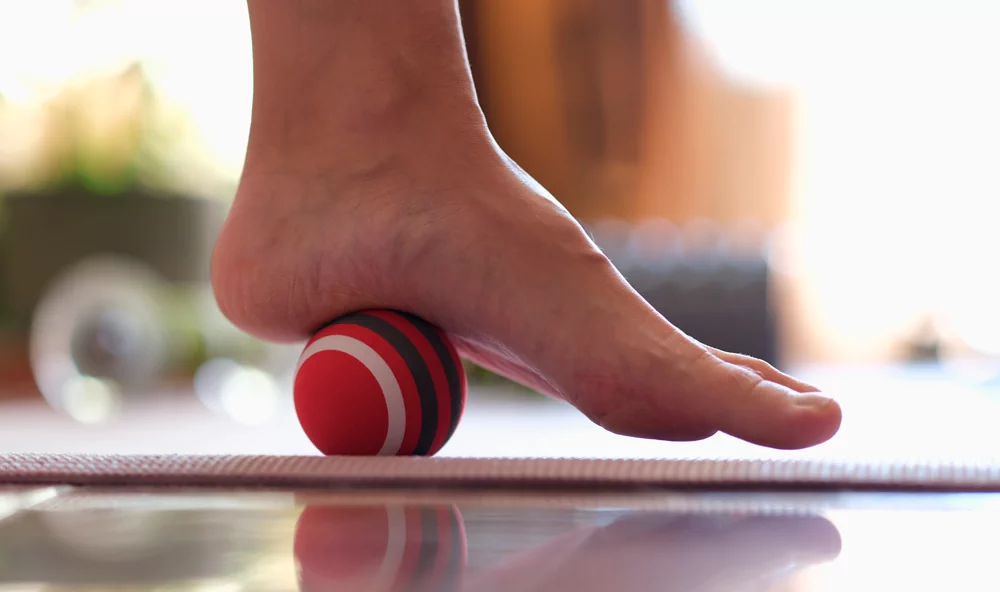
- Toe raises, rolling from toes to heels, lifting toes alternately, rolling to the inner/outer side of the foot (at least 20 repetitions daily).
- Rolling a tennis ball or doing special foot exercises.
- Picking up a towel with your toes.
2. Surgical intervention
Required, mainly, only for flat feet of the 3rd degree. May include:
- Correction of the bones of the foot.
- Ligament plastic surgery.
Prevention: How to avoid flat feet?
- Walking barefoot on sand, pebbles, and grass.
- Exercises for the feet (you can perform the same ones as during treatment; see the point above).
- Correct shoes:
Soft sole with arch support.
Heel no higher than 4 cm. - Weight control to reduce the load.
Remember that flat feet are not a sentence. Even with stage 3 deformation, modern medicine offers effective solutions. The main thing is not to ignore the first symptoms: pain in the feet, rapid fatigue, change in gait. A comprehensive approach (exercises, posture control) will allow the foot to return to its natural functions and prevent complications.
The health of your feet is the basis of mobility and quality of life!